
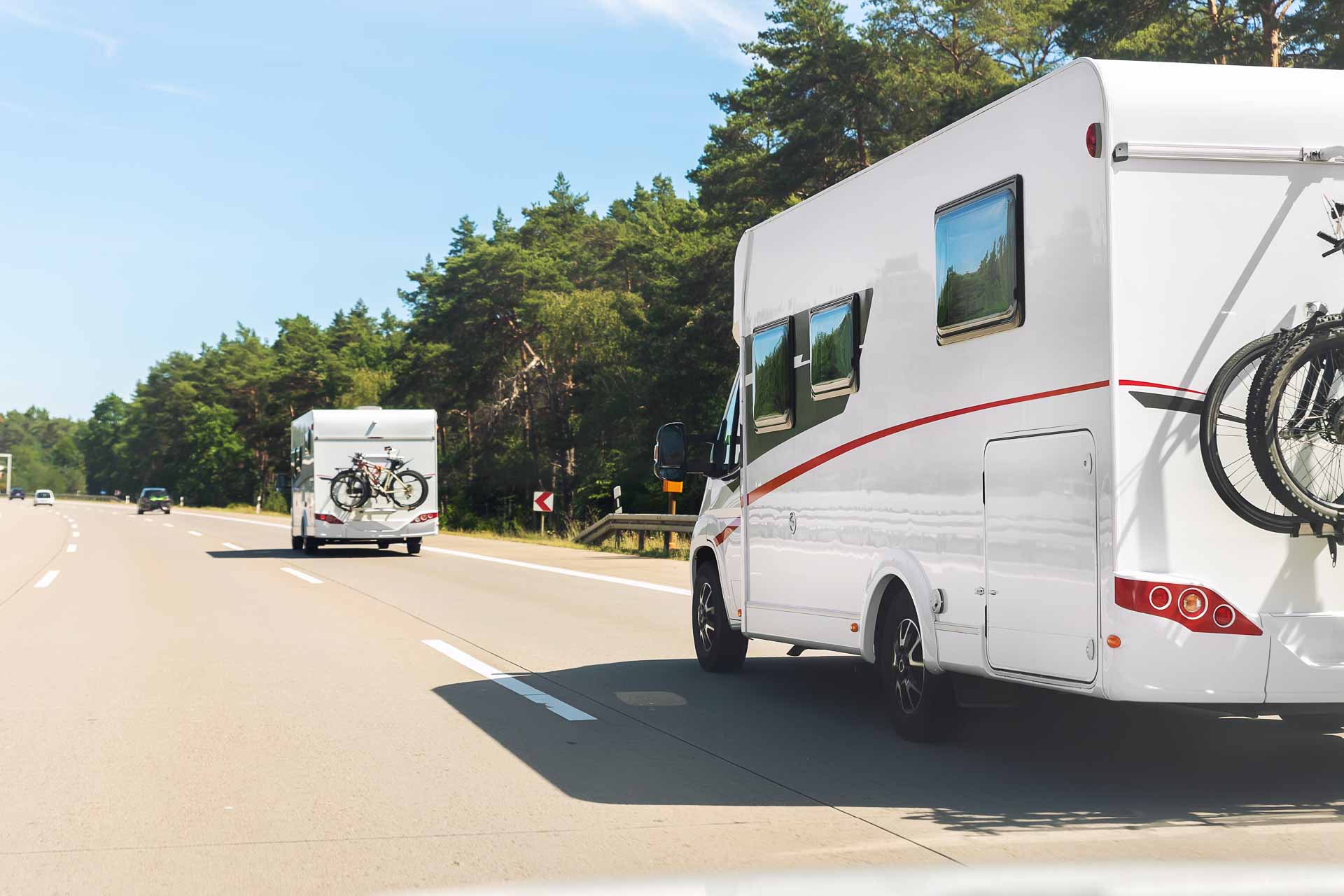
Are you interested in staying at the Ile de Ré la Tour des Prises campsite in a motorhome on one of its open sites? Find out everything you need to know about buying a motorhome:
When it comes to campsite visits, two questions often come up: How much does it cost to rent a mobile home? How much does a motorhome cost? This article aims to answer that second question. Before you continue reading, keep this in mind: price ranges vary widely and depend mainly on the type of motorhome.
The type of motorhome, a determining factor
To make sure you’re getting a good deal when you set out to buy a motorhome, the first thing to do is to target the models best suited to your needs. If you’re a solo camper, or traveling as a duo, a van or pick-up equipped with a removable cell will suit your romantic or adventurous escapades. But if you’re a whole family on holiday, the motorhome will bring you maximum comfort, even if the price will obviously be higher. To give you an idea, here are a few examples of new motorhome prices:
- Fitted van: from €26,000.
- Removable cell: from €10,000.
- Capucine: from €35,000.
- Profile: from €35,000.
- Intégral: from €60,000.
These examples do not include optional features and equipment, which will cost extra. Keep in mind that installing a microwave, a TV, or a bike rack can quickly drive up the cost.
https://www.youtube.com/watch?v=2_Szr7oqdO4
Which motorhome for which purpose?
For couples’ vacation getaways, vans are often the preferred solution for adventurous campers. The removable cell is designed for pickup owners who like to sleep in the wilderness, off the beaten track. The nasturtium, profile and integral are designed for families. The profile, halfway between the small nighcab and the high-priced integral, is very much in vogue. If you’re a frequent traveler who likes to go far and wide in complete autonomy, the integral motorhome will be of interest to you, as it will be your real vacation home on wheels. The investment is substantial, so make sure you’re prepared to spend several weeks on the road, and don’t mind driving several thousand kilometers a year.
New or used motorhome?
Depending on your budget and your motorhome profile, you may want to consider buying a new or used motorhome. Only you can predict how often you’ll be using your motorhome in the future, but if you’re lucky, you’ll find used converted vans for less than €10,000, MPVs for around €15,000, profile campers for less than €22,000 and full-size vehicles for around €35,000.
Why not rent a motorhome?
To spend your vacation on a campsite, you don’t need to own a RV. It’s entirely possible to rent a RV from a professional rental company or a private individual. This is becoming increasingly common. For private individuals, you can check out the well-known classified ads on LeBonCoin.
Please note: if you go this route for your vacation, you’ll definitely need temporary auto insurance. You must be aware that the owner’s insurance policy won’t cover you. In fact, an insurance policy only covers the policyholder and, if applicable, the registered second driver—but not third parties. Don’t worry—to get temporary insurance that covers you during your motorhome vacation, just follow the link. You’ll see that this type of insurance is very easy to obtain.
You can get a quote online in just a few minutes. You’ll receive everything in your mailbox. If you get other quotes to compare, you’ll be able to judge the quality of cover, deductibles and price.
You can also sign up online. At no point will you need to make an appointment with an advisor to finalize the policy. You’ll receive the insurance certificate by email—after payment, of course. All you’ll need to do is print out the green card.
You can extend your coverage (up to a maximum of 90 days) at any time during your stay. So, if you end up staying with family unexpectedly after your campsite trip, that won’t be a problem.
The only thing you’ll need to be careful about is the condition of the drivers, especially if you want one of your children to drive with you. Generally speaking, you need to be at least 21 years old and have held a driving license for at least 2 years.
We’ll also give you a few more tips to help your camping vacation go as smoothly as possible.
Once you’ve rented your motorhome, you’ll need to take the time to get to grips with it before setting off on your vacation. So plan for a longer rental period of a few days. This will give you peace of mind on the road and when manoeuvring.
You can also take advantage of this opportunity to take part in training courses during the few days before your departure. Most of the time, this takes place over the course of a day. This gives you a theoretical reminder of road conditions with a motorhome, followed by off-road and on-road driving. It’s worth it just for the maneuvers.
Check a few things before you leave and every time you drive the motorhome. If your vehicle has a gas cylinder, make sure it’s closed. You’ll also need to put your luggage in the hold and make sure there’s nothing lying around outside the cupboards. Of course, all doors must be closed. The aim is to prevent anything from becoming a projectile when the brakes are applied. Also, make sure the water pump is disconnected.
You need to be clear about the various oil changes, because there’s no escaping them. You’ll have to drain both black and gray water. Grey water is wastewater from your sink and shower. Evacuating it will not only prevent unpleasant odors, it will also lighten your motorhome, since the tank capacity is around 100 liters. You’ll need to position yourself over the escape hatch found at motorhome parks. It looks like a sewer trap. Once positioned above, open the taps on your tank, and let it drain. This should take about 10 minutes. For black water, which corresponds to waste from your toilet, you’ll need to take the cassette out of your motorhome. Every 2 to 3 days, you’ll need to empty it in the designated area. Wear gloves and remember to rinse with 2 liters of water.
Now all you have to do is pack your bags and plan your route before hitting the road to one of our camping car sites on the Ile de Ré!